Leather Care – Clean, Condition, Seal
The complete care system for Nappa, open-pore, coated and vegan leather, and Alcantara
Four Steps to Perfectly Cared-For Leather
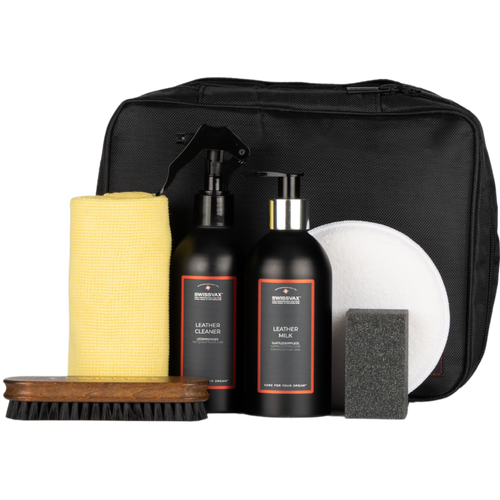
Every leather interior needs the same simple routine: clean, condition, seal – and waterproof when needed. Below, each step is explained with the matching products. New to leather care? Start with a complete kit and you have everything in one box.
Start Here – The Complete Kit
Everything for the full routine in one set – better value than buying individually. Choose the size that suits your care routine.
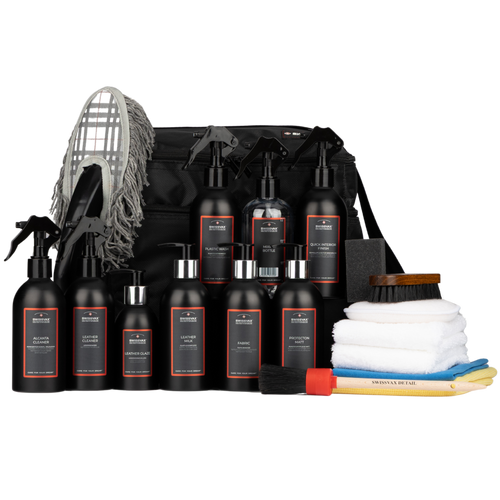
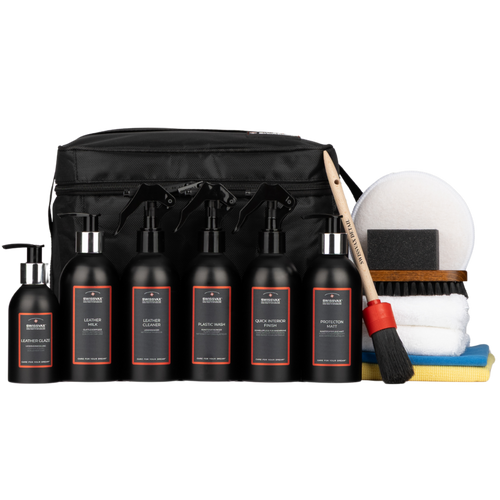
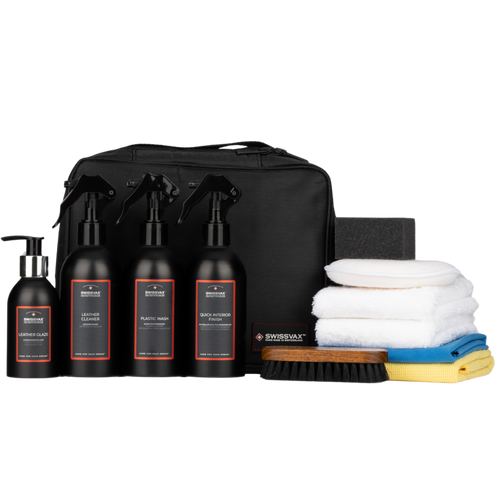
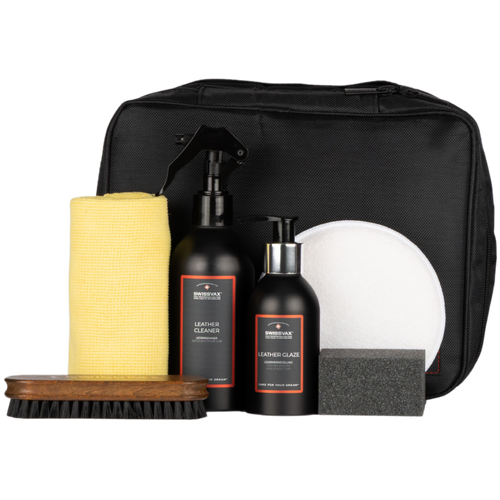
Step 1 – Clean
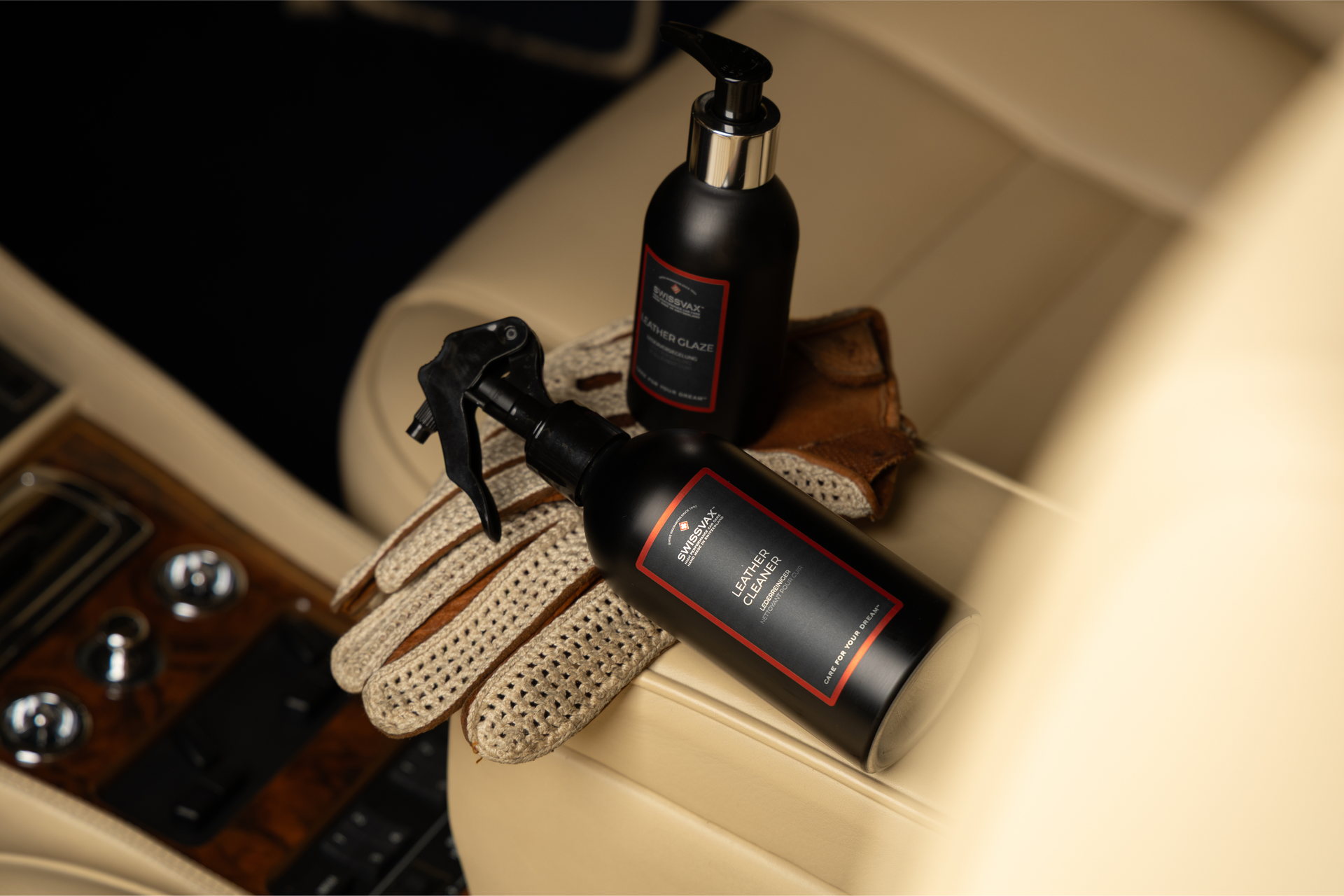
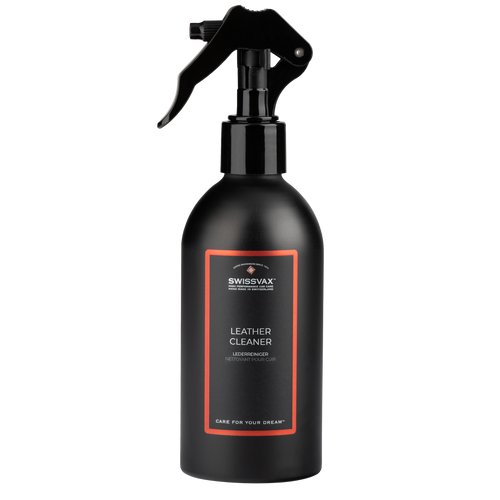
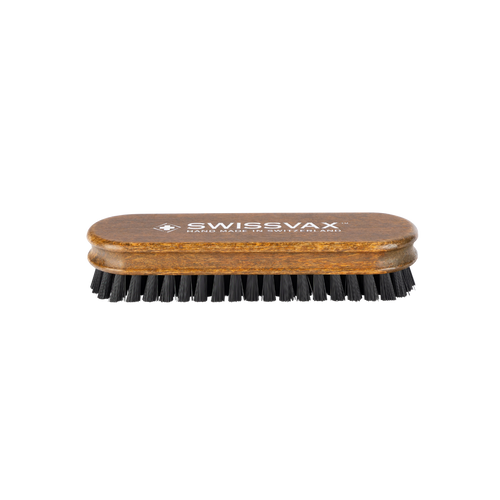
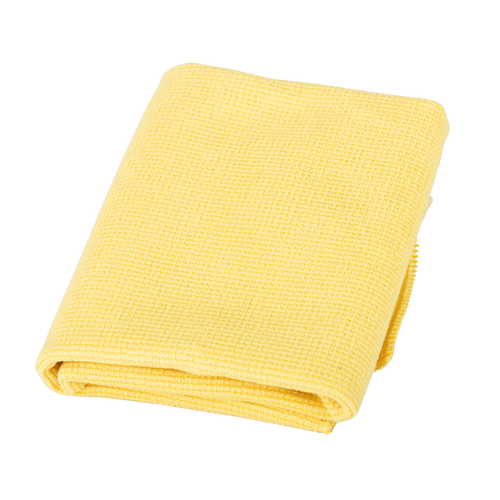
First vacuum loose dust, then work Leather Cleaner into small sections with the cleaning brush and remove the foam with a Micro-Wash cloth. Clean leather is the basis for everything that follows. For perforated (ventilated) seats, use a sponge applicator instead of the brush.
Step 2 – Condition
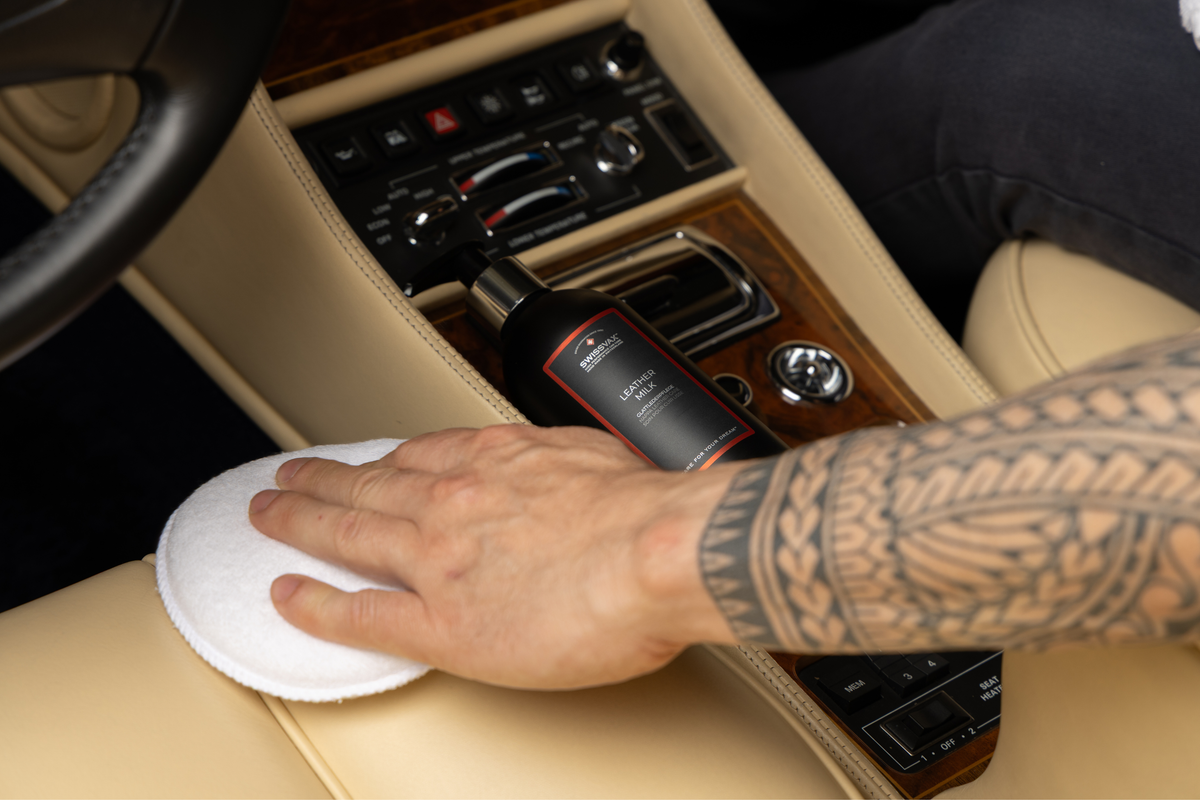
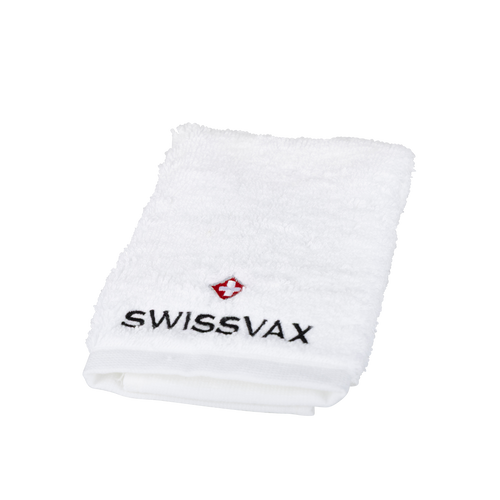
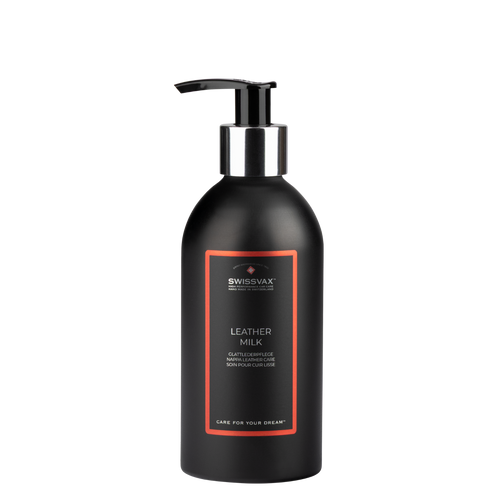
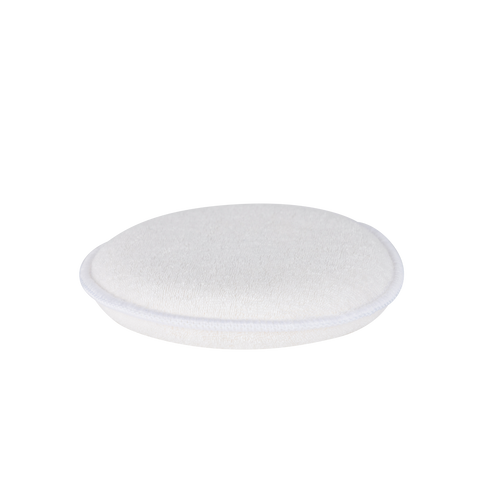
Once fully dry, nourish the leather with Leather Milk and the cotton applicator. This restores lost moisture and keeps the leather supple – the step that prevents drying out and cracking.
Step 3 – Seal
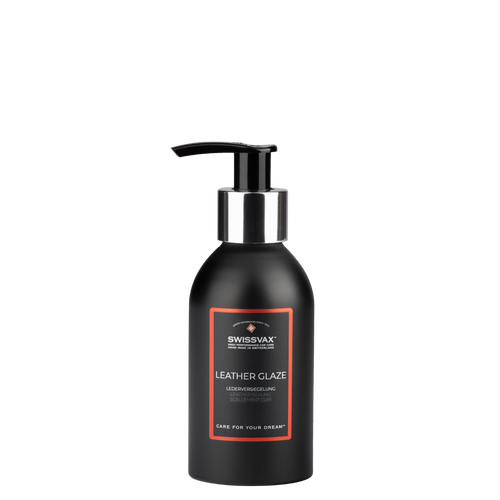
To finish, apply Leather Glaze for an invisible protective layer against abrasion and dye transfer from dark clothing (e.g. jeans). It dries clear and changes neither the colour nor the matte finish of the leather. Apply with a fine-pored sponge in circular motions.
Step 4 – Waterproof (optional)
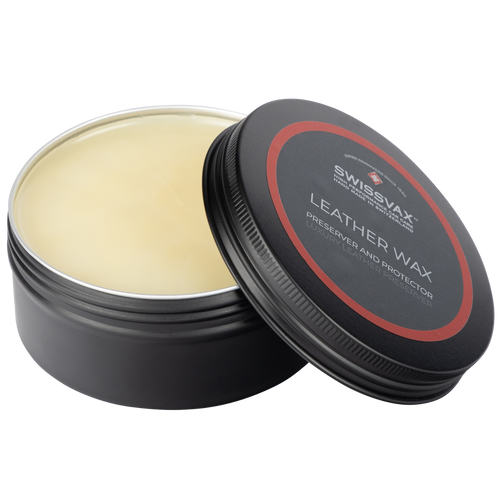
For convertible interiors or leather exposed to moisture: Leather Wax penetrates deep into the leather, keeps it supple and forms a water-repellent protective layer against moisture and mould. For normal, closed interiors this step can be skipped.
Special Solutions for Leather Problems
Sealing, tinting, gloss correction and softening – for the most common leather problems
Leather Glaze – Sealing against abrasion and jeans dye transfer
New leather does not yet need a conditioning milk, but it does need protection against abrasion and dye transfer from the start. Leather Glaze is colourless, matte and is applied seam to seam with a fine-pored sponge in circular motions. Dries in a few minutes.
Leather Healer – Leather tinting for signs of wear
Seat bolsters, steering wheels, gear knobs and armrests show colour wear and scratches over time. Leather Healer evens out these signs of wear – apply seam to seam with a fine sponge in circular motions. Dries in a few minutes and does not rub off.
Gloss Corrector – Gloss correction for smooth leather
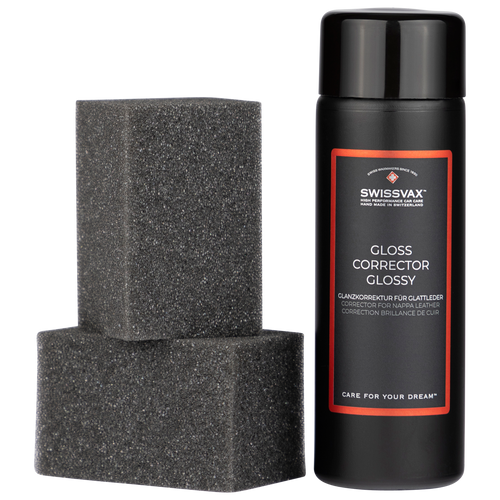
Heavily used leather surfaces such as the steering wheel, armrests and gear knob start to shine over time. Gloss Corrector Matt restores the more matte original look. Several passes increase the effect.
On youngtimers and classics with originally glossy leather: Gloss Corrector Shiny brings overly matte areas back to the gloss level of the rest of the interior.
Leather Softener – Care for hardened leather
Lack of care and heat are the main causes of hardened leather. Leather Softener returns to the leather the oils and minerals drawn out by sunlight and air.
Apply with the sponge applicator and let it soak in. Repeat the treatment several times if needed, so the liquid penetrates gradually into the deeper layers of the leather.
Sealing, Tinting and Gloss Correction
Specialist solutions for the most common automotive leather problems
Vegan Leather – Gentle cleaning without solvents
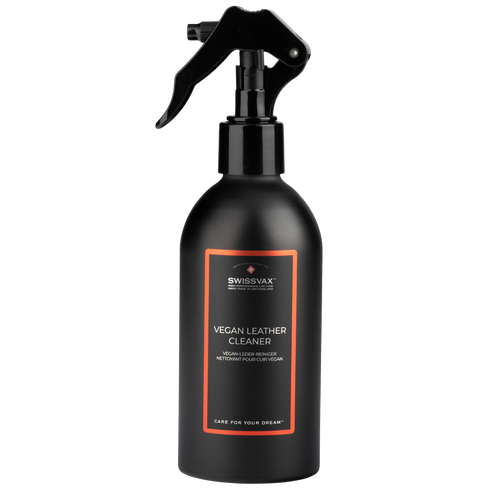
Vegan leather increasingly looks and feels like real leather, but it has different material properties. Conventional leather cleaners can attack the synthetic surface.
1. Clean with the Vegan Leather Cleaner – gentle, effective and solvent-free.
2. On light-coloured vegan leather, additionally seal with Leather Glaze against dye transfer from jeans and clothing.
Products for vegan leather
Solvent-free cleaning and sealing for Nordico, Sensatec and other vegan leather types
Alcantara – Clean, de-pill and seal it correctly
Alcantara combines the feel of suede with high durability, but it needs special care. Conventional textile cleaners can damage the delicate microfibre structure.
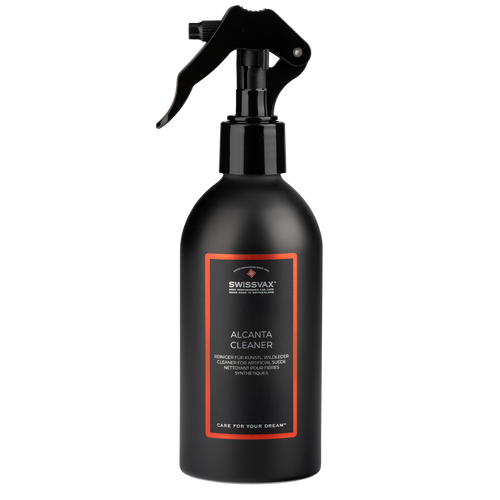
Cleaning: vacuum the surface, spray Alcanta Cleaner onto a sponge applicator or directly onto the surface. Clean by dabbing with light pressure. Dab dry with Micro-Wash. Never rub! Never clean with heat.
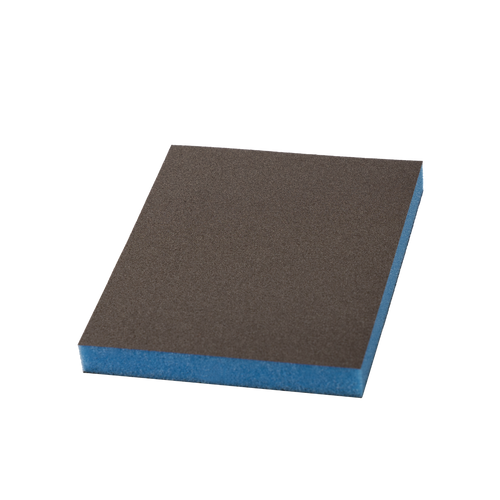
Pilling: the typical bobbles in high-wear areas can be removed with the leather grinding pad, as long as the pilling is not too severe.
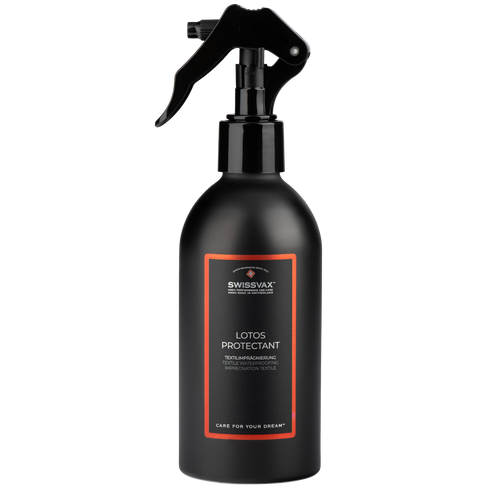
Sealing: after cleaning and drying, seal with Lotos Protectant – for long-lasting protection against new soiling.
Products for Alcantara
Specialist cleaner, grinding pad against pilling and long-term textile sealing
Leather Care & Leather Types
Answers on cleaning, caring for and sealing smooth, open-pore, vegan leather and Alcantara in the vehicle interior.
-
What types of leather are there in a car and how do they differ?
In the vehicle interior, different types of leather and leather-like materials are used, which differ clearly in structure, appearance and care requirements. Smooth leather is surface-sealed, resistant and easy to care for. Open-pore leather such as aniline leather is natural, breathable and particularly sensitive to moisture, dirt and abrasion. Vegan leather is a synthetic material that visually resembles leather, but ages differently and requires gentle, material-appropriate care. Alcantara is not leather, but an artificial velour material with a fine fiber structure and requires a completely different cleaning method.
Each of these surfaces reacts differently to cleaners, moisture and mechanical stress. Tailored care is therefore essential to permanently preserve appearance, feel and durability.
All products can be found in our leather care collection. Detailed instructions on our leather care page and in the leather tutorials.
-
How do I tell whether my leather is open-pore or coated?
Whether leather is open-pore or coated can be determined with a simple water test on an inconspicuous spot. If a small drop of water is absorbed into the leather within a short time and the spot darkens, it is open-pore leather such as aniline leather. If the drop remains on the surface and can be wiped off, the leather is surface-sealed and therefore coated smooth leather.
Open-pore leather is natural, breathable and particularly sensitive to moisture and dirt. Coated smooth leather has a protective color layer, is more resistant and easier to care for.
More on this on our leather care page.
For gentle cleaning of both leather types, Leather Cleaner is suitable.
-
How do I clean smooth leather in the car correctly?
Depending on the degree of soiling, smooth leather is cleaned with SWISSVAX Leather Cleaner or SWISSVAX Leather Cleaner Forte. The cleaner is applied gently and the dissolved dirt is then removed with a soft, clean cloth.
Light to normal soiling can be removed with Leather Cleaner. For heavier dirt, discoloration or heavily used contact zones, Leather Cleaner Forte is used. In both cases, the surface remains supple and is not attacked, as cleaning takes place without aggressive solvents.
-
Does new leather need care or just protection?
New smooth leather requires no care, as it is sufficiently re-greased at the factory. However, it should be protected from the start to prevent premature wear, abrasion and denim dye transfer. For this, SWISSVAX Leather Glaze is used.
Leather Glaze forms an invisible protective layer on the leather surface that reduces friction and makes it considerably harder for dyes to penetrate. The leather thus stays clean, even and visually like new for longer, without changing its feel.
-
How do I care for used or dry leather?
Used or dry smooth leather is cared for after cleaning with SWISSVAX Leather Milk. The leather care product is applied sparingly, absorbs into the material and keeps the leather supple. At the same time, the leather is protected from further drying out and premature wear.
Leather Milk replenishes stressed leather with moisture, improves the feel and supports natural elasticity without over-greasing the surface or making it look greasy.
-
Which leather types must I not treat with SWISSVAX leather products?
SWISSVAX leather products for smooth leather must not be used on buffalo leather or suede. These leather types have a different fiber structure and react sensitively to smooth leather cleaners and care products.
Open-pore leather such as aniline leather must also not be treated with strong cleaning products such as SWISSVAX Leather Cleaner Forte or with brushes. Overly intensive cleaning can damage the open structure, cause stains or permanently alter the surface.
For sensitive leather types, the rule is therefore always: clean appropriately for the material, work without pressure and only use products intended for the purpose.
All suitable products in the leather care collection.
For all compatible leather types, suitable Leather Care Sets are available.
-
How do I care for vegan leather in the car?
Vegan leather is cleaned and protected if necessary, but requires no nourishing emulsions such as those used on genuine leather. For material-appropriate cleaning, SWISSVAX Vegan Leather Cleaner is used.
The cleaner gently removes dirt, preserves the elasticity of the material and protects against drying out and cracking. The surface is cleaned without over-conditioning it or making it look greasy. Depending on the surface structure, application is carried out with a soft cleaning brush or a sponge, followed by wiping with a clean cloth.
Vegan leather is a synthetic material with a different aging behavior than genuine leather. Classic leather care products are therefore unsuitable and can negatively affect the surface in the long term.
Interior & Cockpit Care
Cleaning, care and protection of all interior materials from plastic and wood to screens with material-appropriate Swissvax products.
-
How do I clean the interior correctly?
Interior cleaning always begins with thoroughly vacuuming loose dirt. Use a vacuum cleaner with a narrow nozzle; ideally, floor mats and loose carpets are removed beforehand.
Textile surfaces such as seats, carpets, headliners or floor mats are then cleaned with SWISSVAX Fabric . The textile cleaner removes dirt gently without leaving cleaning edges and is suitable for all textile materials in the interior.
Plastics and vinyl surfaces are then cleaned with SWISSVAX Plastic Wash. This provides deep-pore cleaning and forms the basis for subsequent care or sealing, without attacking the surface or making it look greasy.
This sequence keeps the interior hygienically clean, cared for appropriately for each material and visually even.
All products and instructions on our interior care page.
-
How do I care for sensitive surfaces such as piano lacquer or screens?
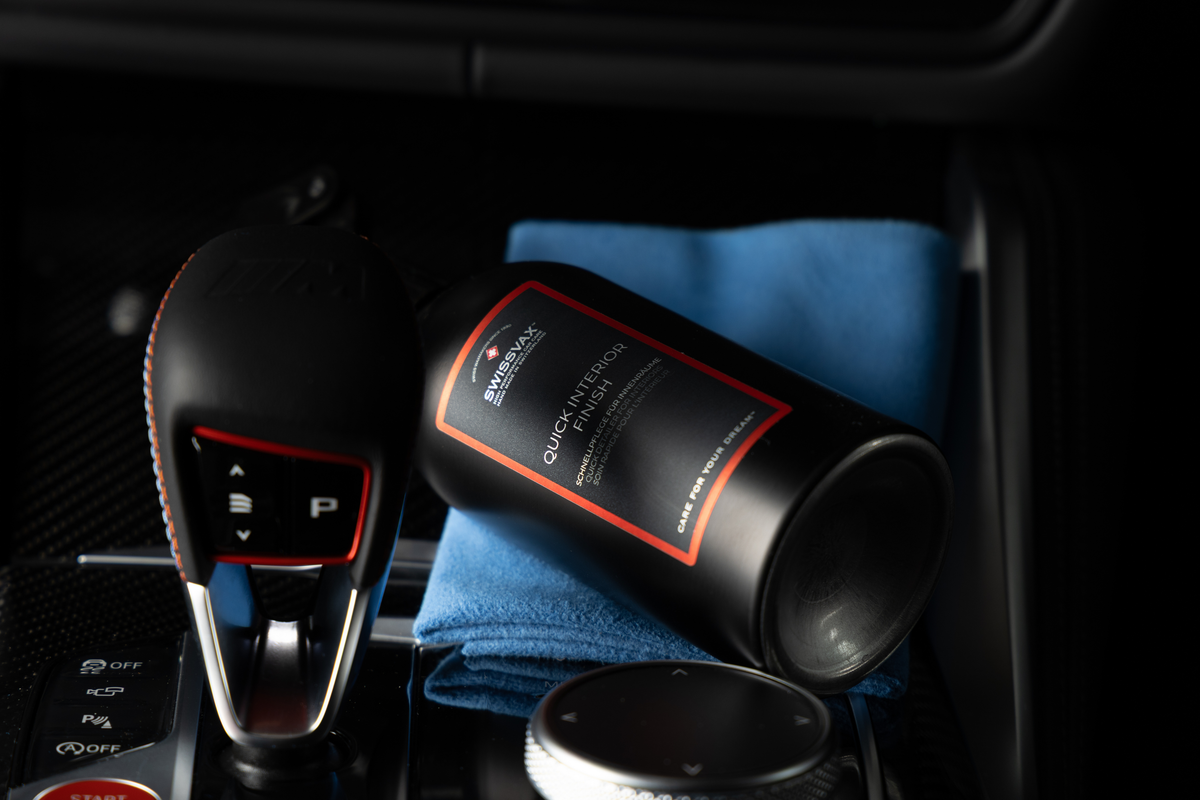
Sensitive surfaces such as piano lacquer, displays and high-gloss interior parts are gently cleaned with SWISSVAX Quick Interior Finish and a SWISSVAX Micro Polish. Fingerprints, dust and light soiling can be removed streak-free without causing micro-scratches.
Quick Interior Finish has an antistatic effect and is formulated solvent-free. This means the sensitive surface is not attacked, new dust attraction is reduced and the original finish of piano lacquer and screens is preserved.
-
How are plastic surfaces in the interior cared for?
Plastic and vinyl surfaces in the interior are first thoroughly cleaned with SWISSVAX Plastic Wash. This deep-pore cleaning removes dirt, skin oils and deposits and creates the necessary basis for even care.
After cleaning, SWISSVAX Protecton provides intensive deep care and rich, even protection. For matte surfaces, or when a matte finish is desired, SWISSVAX Protecton Matt is used. Both products protect against drying out, discoloration and premature material wear.
-
How do I protect wheels long-term against brake dust and salt?
For long-term protection, SWISSVAX Autobahn wheel wax is used. It forms a heat-resistant protective layer based on carnauba wax, enriched with PTFE. This protective layer makes it harder for brake dust, salt and road grime to adhere and makes subsequent cleaning considerably easier.
Thanks to its high temperature resistance, Autobahn wheel wax is also suitable for heavily stressed wheels. Brake dust adheres less, salt and moisture do not penetrate the surface, and existing wheel coatings are preserved. The protection helps prevent corrosion and permanent surface damage.
-
How do I care for tires and whitewall tires correctly?
Tires are cared for with SWISSVAX Pneu . The tire care product supplies the rubber compound with moisture, protects against drying out and cracking and ensures an even, deep black appearance. It is applied to clean and dry tire sidewalls by spraying or targeted application with a brush or hand puck.
Whitewall tires are first cleaned with SWISSVAX Pneu White . The special cleaner reliably removes yellowing and stubborn dirt without attacking the material. After cleaning and drying, the Swissvax Pneu care product can also be applied to the black rubber areas of whitewall tires for protection and gloss.